
Earth Day is celebrated every year on April 22nd to honour, show respect for our Earth, and to remind us of everyday things we can be doing to help preserve the Earth for future generations. While I think it is important to celebrate Earth Day, it is my goal as a teacher to work towards “making everyday Earth Day,” to promote sustainable actions and respect for the Earth throughout the school year in hopes that these values be carried with students throughout their lives. I want my students to know that Earth Day is more than a once a year garbage clean up, so in this post, I share classroom activities and resources that can be used on Earth Day as well as some that promote sustainable solutions to implement throughout the year.
History and Origins of Earth Day
The first Earth Day took place in April 1970 in the United States. In Transformative, Sustainability Education, Lange (2023) states: “Earth Day is considered to be the beginning of the environmental movement, as an organized movement…which bound single-issue campaigns and the growing number of groups into a concerted effort.” At this first event, people gathered at locations around the United States to “march, speak, and attend teach-ins” (Lange 2023). Since then, Earth Day has spread around the globe with over one billion people taking part in various activities and events such as environmental workshops, zero-waste initiatives, community clean-ups and tree plantings, bringing awareness to environmental issues that impact both humans and wildlife.
Schools have played an important part in spreading the message of Earth Day, being able to get many students involved since the first Earth Day in 1970. According to Hungerman and Moorthy (2023) “some schools closed for the day so that students and teachers could pick up litter and clean their communities, while other schools and universities had events such as teach-ins, tree plantings, and demonstrations.” Today, schools in Canada don’t close for Earth Day, but many teachers use Earth Day as a starting point to get students involved in making sustainable choices and positive changes in their communities.
Classroom Activities and Resources
- The Zero Waste Classroom Podcast by Jillian Starr with guest Heidi Rose discusses ways to bring the idea of “Zero Waste” into the classroom with a focus on changes that can be made throughout the school year, not just on Earth Day. Heidi suggests small adjustments in the classroom from less lamination to the problems with the emphasis on recycling instead of the more beneficial actions of reducing and reusing (also refusing).
https://jillianstarrteaching.com/js_podcast/the-zero-waste-classroom-with-heidi-rose/
- The Earth Day website provides information on the history of the Earth Day, its successes and ways to get involved in current projects. It includes a timeline of significant events in Earth Day’s history and also has links to Youtube videos on the first Earth Day, Gaylord Nelson, and the goals of Earth Day. This website would be useful for high school students doing research.
- National Geographic for Kids website is a great resource for elementary age students looking to research Earth Day and ways they can make a difference in their environment.
https://kids.nationalgeographic.com/celebrations/article/earth-day
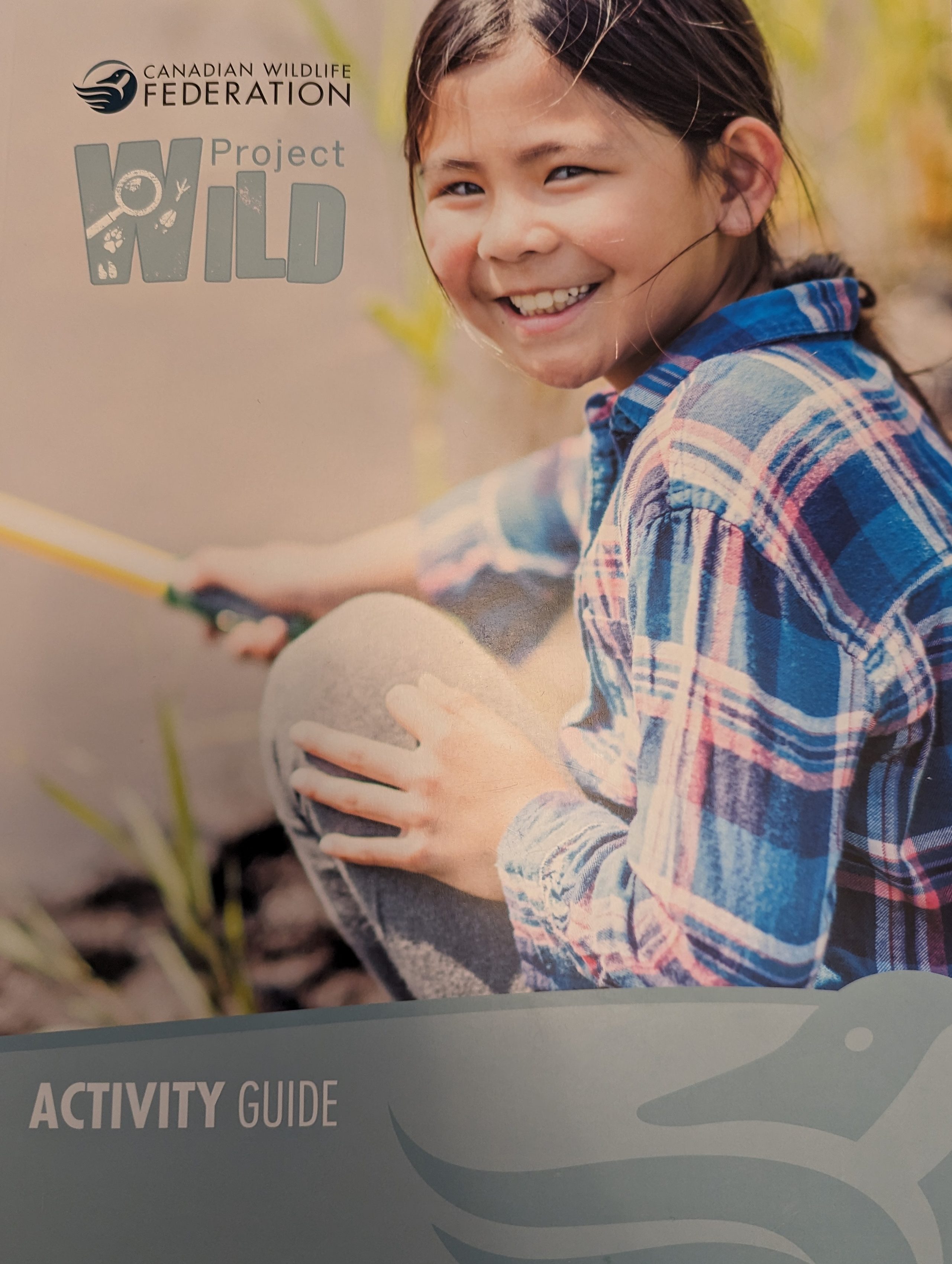
- Canadian Wildlife Federation has a wealth of information for teachers to help students get engaged in preserving wildlife from participating in citizen science, creating pollinator gardens, resources on plant identification including native and invasive species. Canadian Wildlife Federation also has a great activity guide for classrooms called Project Wild with activities from Kindergarten to Grade twelve.
- David Suzuki Foundation website has resources for both parents and guardians as well as teachers to help youth connect with nature. When people spend time and appreciate nature, they will be more likely to want to preserve it for future generations (not to mention the health benefits as well).
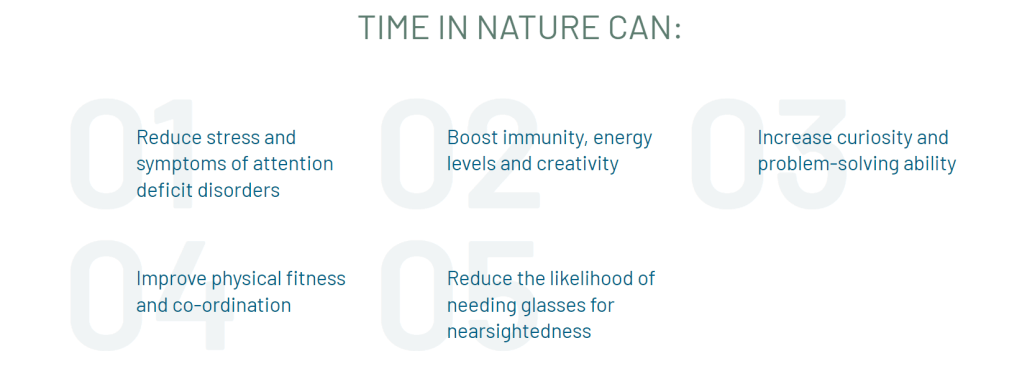
https://davidsuzuki.org/take-action/act-locally/connecting-youth-with-nature/
- The Monarch Teacher Network is a great resource for teachers who want to engage students in learning about the Monarch butterfly including its life cycle, habitat, migration patterns and other pollinators. The Monarch Teacher Network has different regions who do different projects. My Manitoba Region puts on Professional Development seminars for teachers, lead presentations in classrooms, and provide plants for schools and students to make their own pollinator gardens.
http://www.monarchteachernetworkmanitoba.com/ (Monarch Teacher Network Manitoba Region Website)
Using Picture Books to Spark Conversation
As an elementary school teacher, I love using picture books to share stories with my students and to help share information on a variety of topics. Here, I share a few books that have great potential in the classroom. There are many more excellent picture books with a focus on the environment, but these are a good starting point.

One Well The Story of Water on Earth By: Rochelle Strauss is a beautiful picture book that can lead to great discussions on the importance of preserving water and how some humans have less access to fresh water than others.

A Love Letter to Our Planet Thank You Earth By April Pulley Sayre is an excellent introduction to be grateful for all of the beauty the Earth has to offer and can lead into awesome discussions and projects for students about their favourite parts of Earth (and why it is important to protect it).
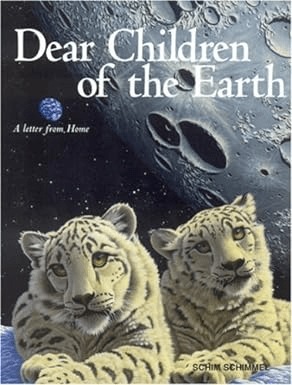
Dear Children of the Earth A letter from Home by Schim Schimmel is a book written from the perspective from Mother Earth to children everywhere. Mother Earth is asking for help from children to do their part in protecting the plants, animals, and nature that make up planet Earth. It is a great starting point for students to write a letter back to Mother Earth with ideas of things they can do to protect the Earth.
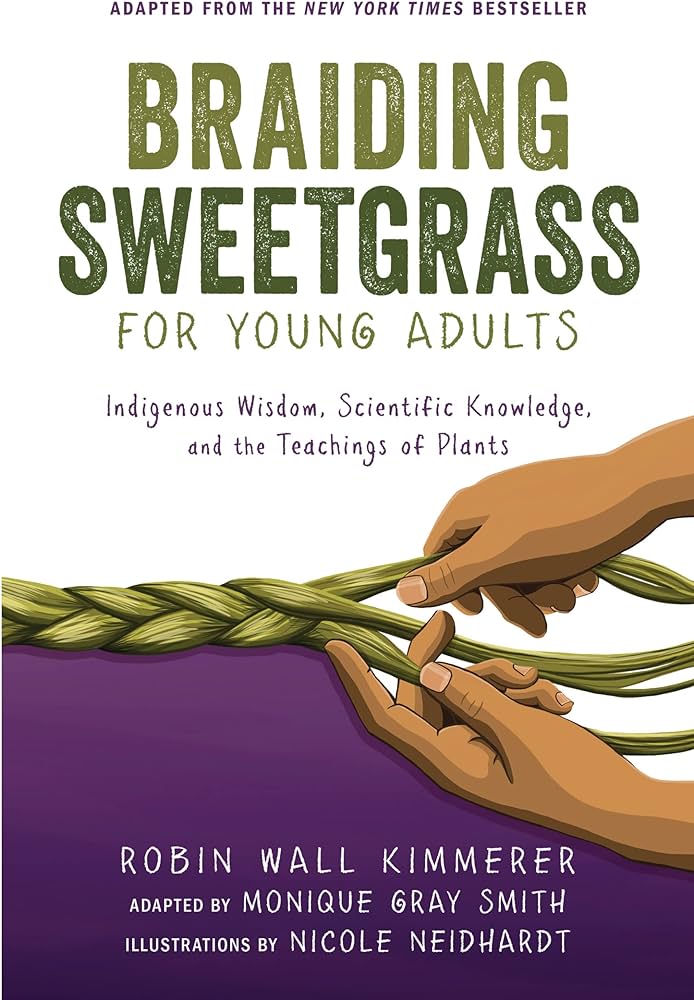
Braiding Sweetgrass for Young Adults has been adapted by Monique Gray Smith from the original version of Braiding Sweetgrass by Robin Wall Kimmerer. In my opinion it is a love letter to the Earth, a cry for help and teaches us how to learn from the plants around us.
I hope this final video left you with some inspiration to save the Earth.
Thanks for reading, watching, and listening. I hope you enjoyed.
-Samantha
Sources:
Connecting youth with nature. David Suzuki Foundation. (2020, January 8). https://davidsuzuki.org/take-action/act-locally/connecting-youth-with-nature/#editor-7
Davidson, R. (2021, March 9). Earth Day Facts and History. Celebrations. https://kids.nationalgeographic.com/celebrations/article/earth-day
Gray Smith, M., Neidhardt, N., & Kimmerer, R. W. (2022). Braiding sweetgrass for young adults: indigenous wisdom, scientific knowledge, and the teachings of plants . Zest Books.
Hungerman, D. and Moorthy, V. (2003). Every Day Is Earth Day: Evidence on the Long-Term Impact of Environmental Activism. American Economic Journal: Applied Economics 2023, 15(1): 230–258 https://doi.org/10.1257/app.20210045
Lange, E. A. (2023). Transformative sustainability education: Reimagining our future. Routledge.
Monarch teacher network of Canada: Manitoba region. MONARCH TEACHER NETWORK OF CANADA: MANITOBA REGION. (n.d.). http://www.monarchteachernetworkmanitoba.com/
Sayre, A. P. (2018). Thank you, Earth: a love letter to our planet. First edition. New York, NY, Greenwillow Books, an imprint of HarperCollinsPublishers.
Schimmel, S. (1994). Dear Children of the Earth: a love letter from home. Northword Press, Minnetonka, MN.
Starr, J. (2021, January 3). The zero waste classroom with Heidi Rose. Teaching with Jillian Starr. https://jillianstarrteaching.com/js_podcast/the-zero-waste-classroom-with-heidi-rose/
Strauss, R., & Woods, R. (2007). One well: the story of water on Earth. Toronto, Kids Can Press.
The history of earth day. Earth Day. (2023, August 9). https://www.earthday.org/history/
Wild spaces. Canadian Wildlife Federation. (n.d.). https://cwf-fcf.org/en/explore/wild-spaces/?gclid=EAIaIQobChMI-7n7sdmygQMVsMfjBx3KZg26EAAYAiAAEgKJWvD_BwE
 Sustainability, Creativity, and Innovation: Sustainability in the Classroom