Featuring Nicole Webster and Kelly Leask
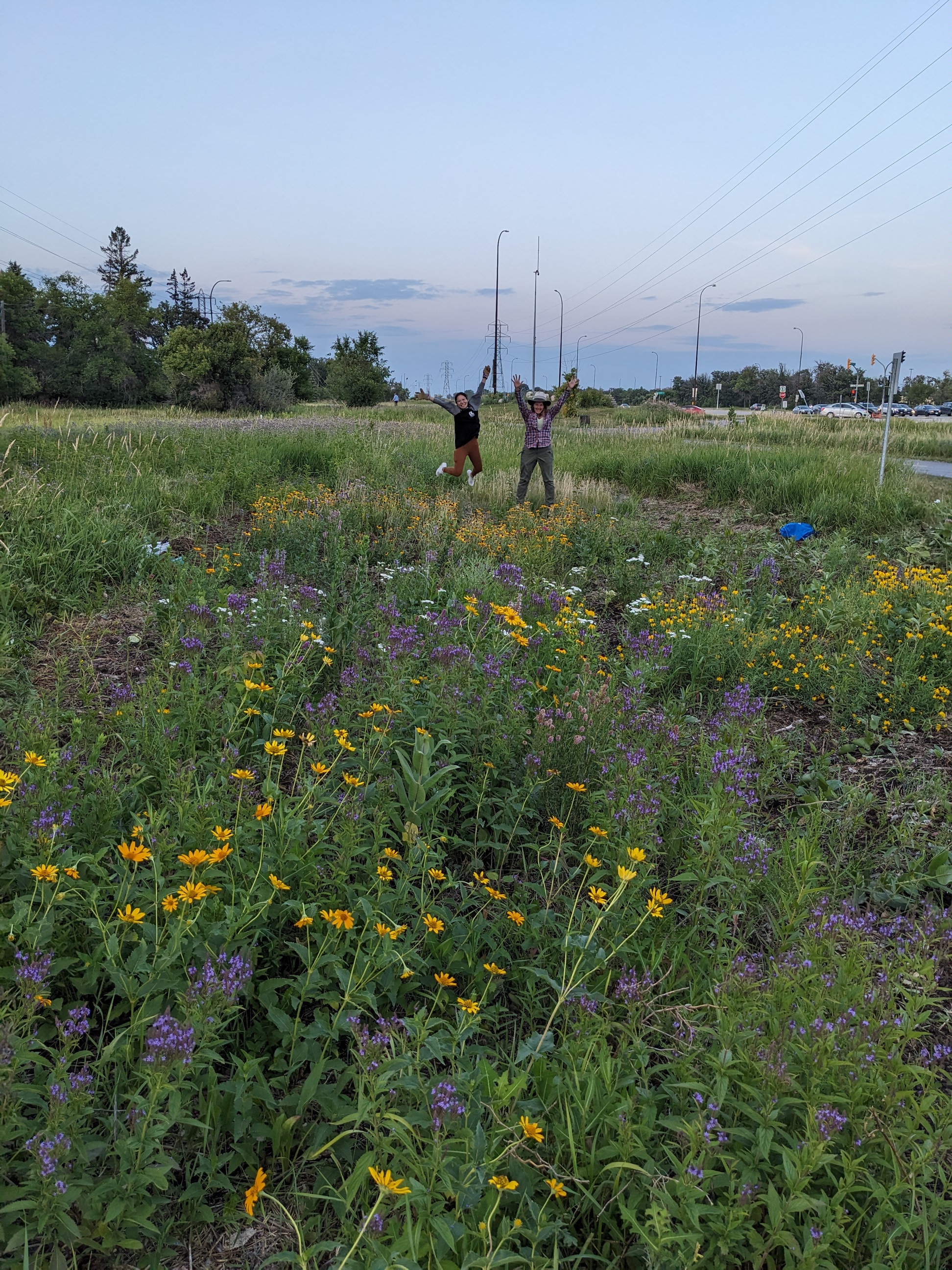
The local source of vigour in my community that I chose to feature is the Winnipeg Wildflower Project, run by Nicole Webster (Project Coordinator) and Kelly Leask (Founder). They have a goal of restoring urban spaces to native prairie habitat, which is considered to be one of the most endangered ecosystems. This small non profit consists of two people and a handful of volunteers, but has made a big impact in the local native plant community, influencing many people to grow native plants in their own gardens and opening minds to the idea of reducing lawns and increasing garden size.
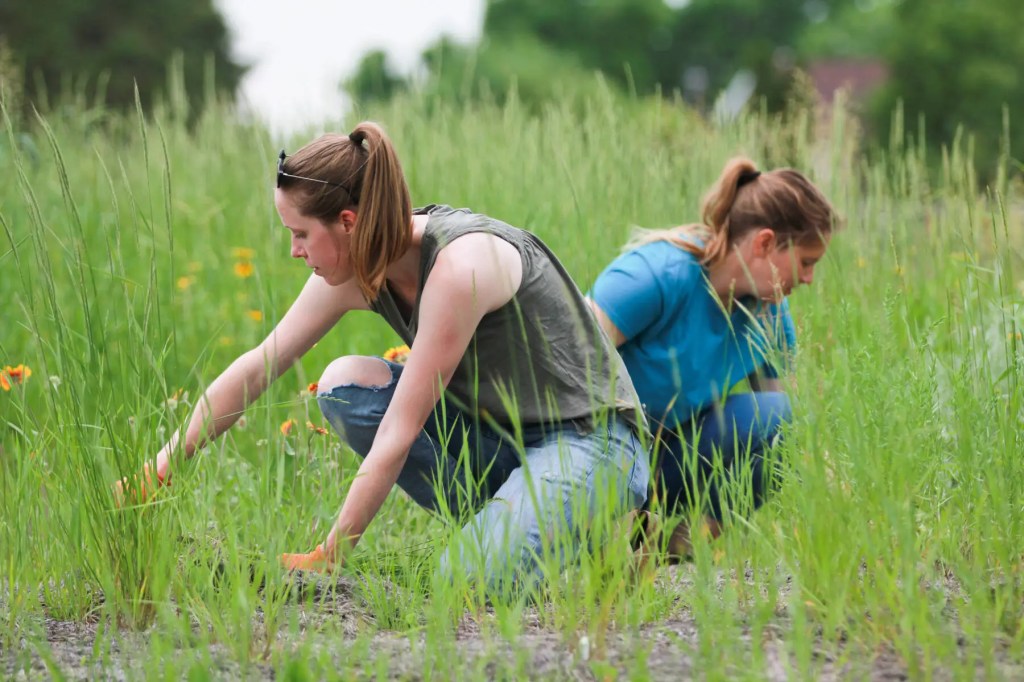
Photo sourced from: https://www.winnipegfreepress.com/our-communities/east/2022/07/13/the-way-nature-intended
Origins of the Project
The Winnipeg Wildflower Project began when a local business was evicted from their rental land which was owned by the Crown corporation, Manitoba Hydro. Erin Crampton, a local entrepreneur concerned with the local food movement, had rented land with Manitoba Hydro for many years for her small business and was forced to re-locate her shop. She was told she had to remove everything on the land, including the building, parking lot, and gardens. Erin and her husband are bird watchers and stewards of the environment and had made efforts to diversify the landscape on the space, planting a variety of plants and were disappointed to see their efforts be reduced to turning the land back into mowed lawn, void of any wildlife or habitats. Erin reached out to Kelly Leask, owner of Prairie Originals, a local native plant nursery, to see if she wanted to collect any seeds before Hydro mowed and removed all of the plants living there. Kelly had the idea to turn it into a community event to collect seed, inviting members of the community who were familiar with the Cramptons’ business, and amazingly, 75 people came to collect seed at this event.
Erin wanted to leave the space in a good state, meaning a diverse, functional ecosystem- more than simply a field of weeds or mowed lawn. Erin reached out to Hydro to see if they would be willing to have the site restored or used for native seed plots. Hydro responded with a bunch of hoops to jump through.
Kelly and Erin would have to form a formal organisation- a registered non for profit group and would have to provide all of the funding, volunteer labour, and any resources necessary to complete and maintain the project.
In the end, even though both of these requirements had been met, the project was unable to be fulfilled, because Manitoba Hydro had a last minute change of heart, and could not allow the project to proceed because they claimed to have a responsibility to their clients and a tall grass prairie would impede with accessing their power lines. Hydro suggested they reach out to the Bishop Grandin Greenway (Abinojii Mikanah) to see if they have a spot that would work for their project.
During the time when Kelly was in communications with Manitoba Hydro in hopes of revitalising the old Cramptons site, Nicole Webster , an environment enthusiast, and now project coordinator of the Winnipeg Wildflower Project, had recently completed the Canadian Conservation Corps program and was looking for a community service project focused on conservation. Nicole had already applied for funding and received $1500 dollars for a restoration project. Nicole reached out to the Greenway and they accepted her proposal, and within two weeks they were getting started on the project.
Projects Completed
Since the project’s inception, the Winnipeg Wildflower Project has completed five garden projects:
“1.) Bishop Grandin Greenway: This seed plot site was planted in 2019 in the north west corner of Bishop Grandin and St. Mary’s. It’s located along the active transportation path. These plots were made possible with a #RisingYouth grant from Taking It Global. Find the site here!
2.) Point Douglas: This seed plot site was planted in 2020 at the Euclid Food Forest located on Euclid Avenue. These plots were made possible by donations from supportive community members. Find the site here!
3.) Transcona: This garden was planted in 2021 in Rotary Heritage Park along Plessis Avenue, located along the active transportation path. The garden was funded through the Land Dedication Reserve Fund with support from City Councillor Shawn Nason. Find the site here!
4.) Waterfront: This garden was planted in 2021 in Fort Douglas Park at Waterfront Drive and Alexander Avenue. Funding was provided through TD Park People. Find the site here!
5.) Wellington: This garden was planted in 2022 in Sir John Franklin Park at Wellington Crescent and Lindsay Street. The garden was funded through the Land Dedication Reserve Fund with support from City Councillor John Orlikow. Find the site here!” ( Winnipeg Wildflower Project, 2023).
(Honorary Mention) Chief Peguis Millennium Gardens: The WWP helped to plant at this site, but are not responsible for general maintenance.
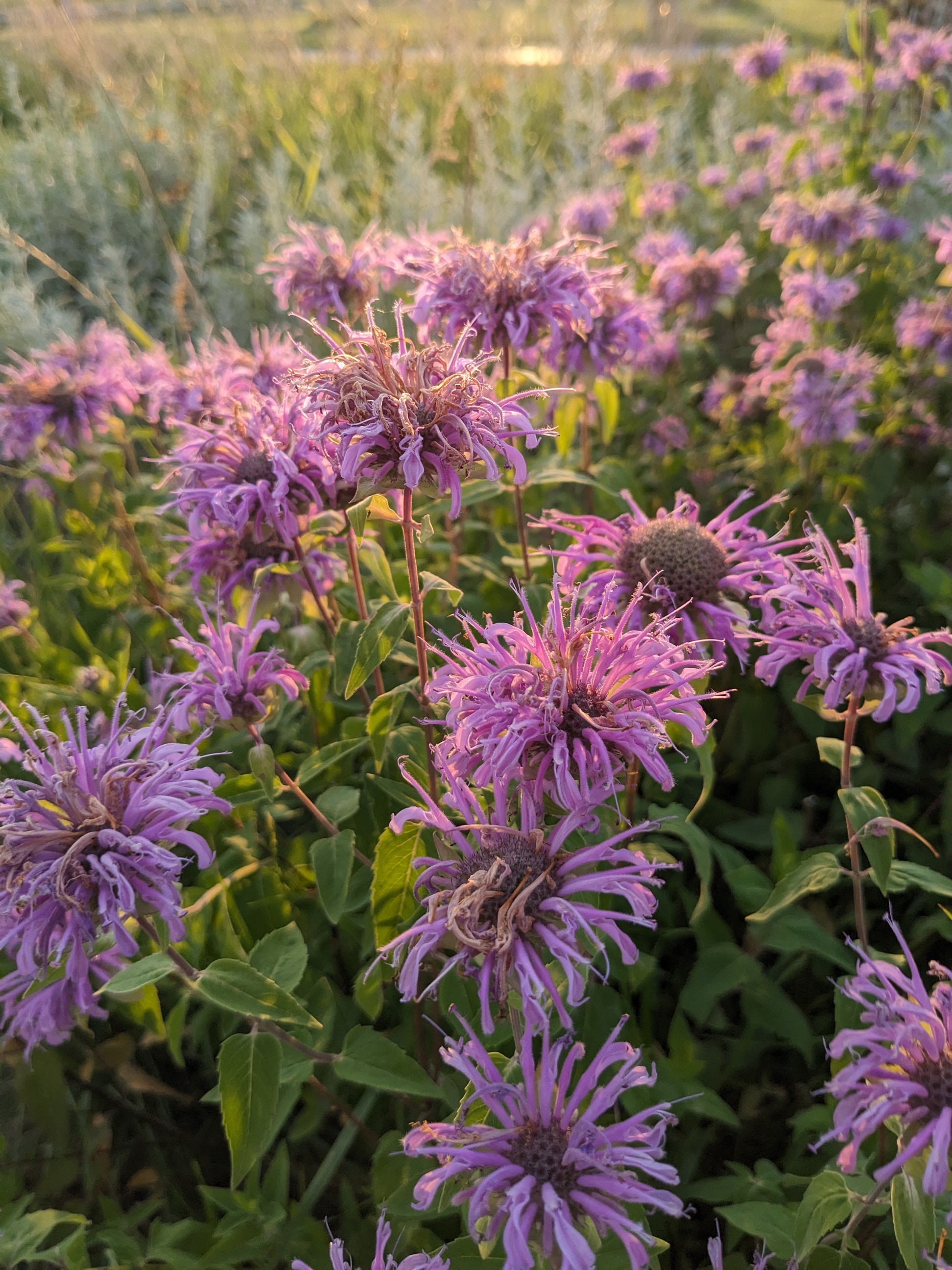
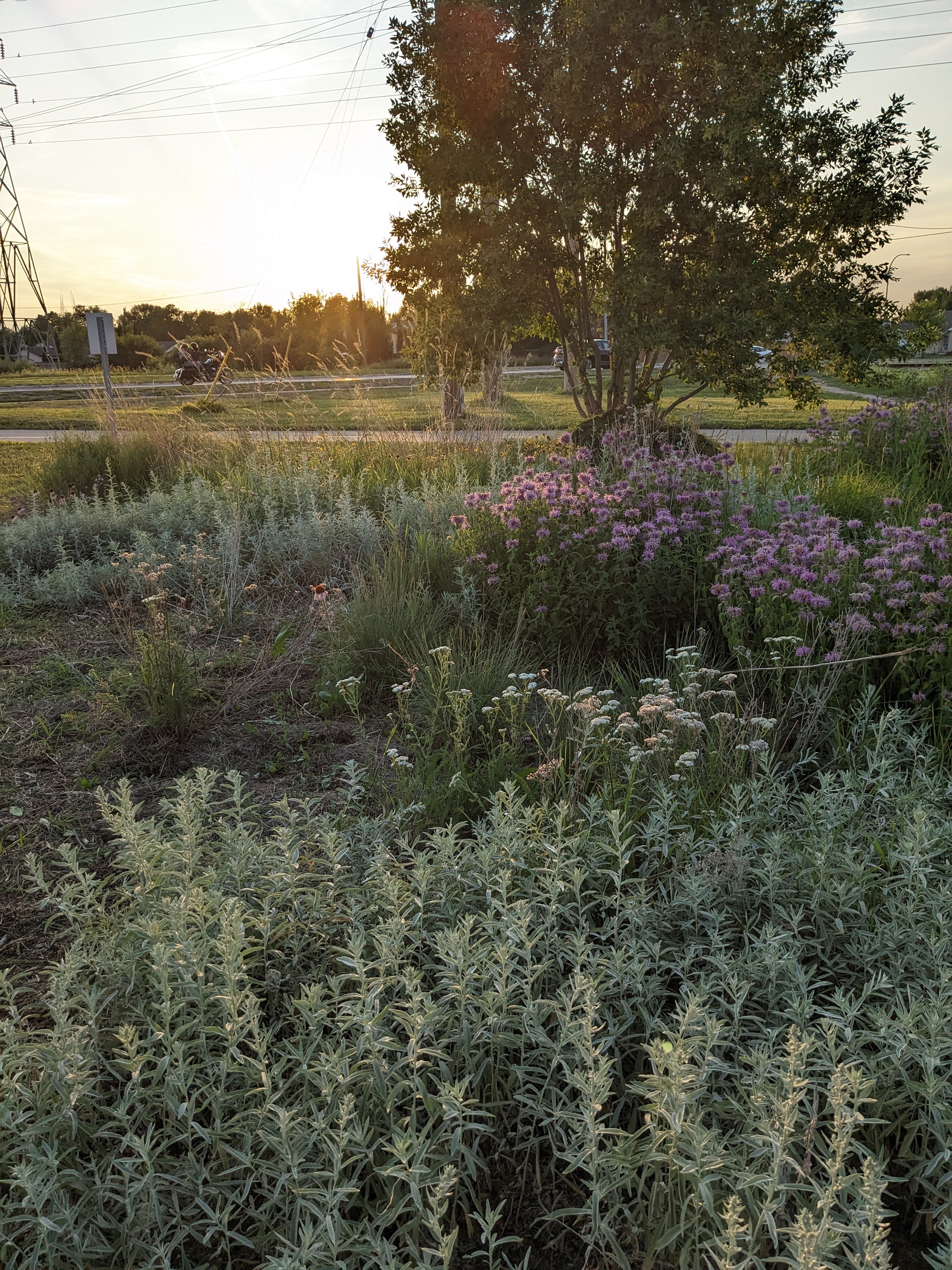
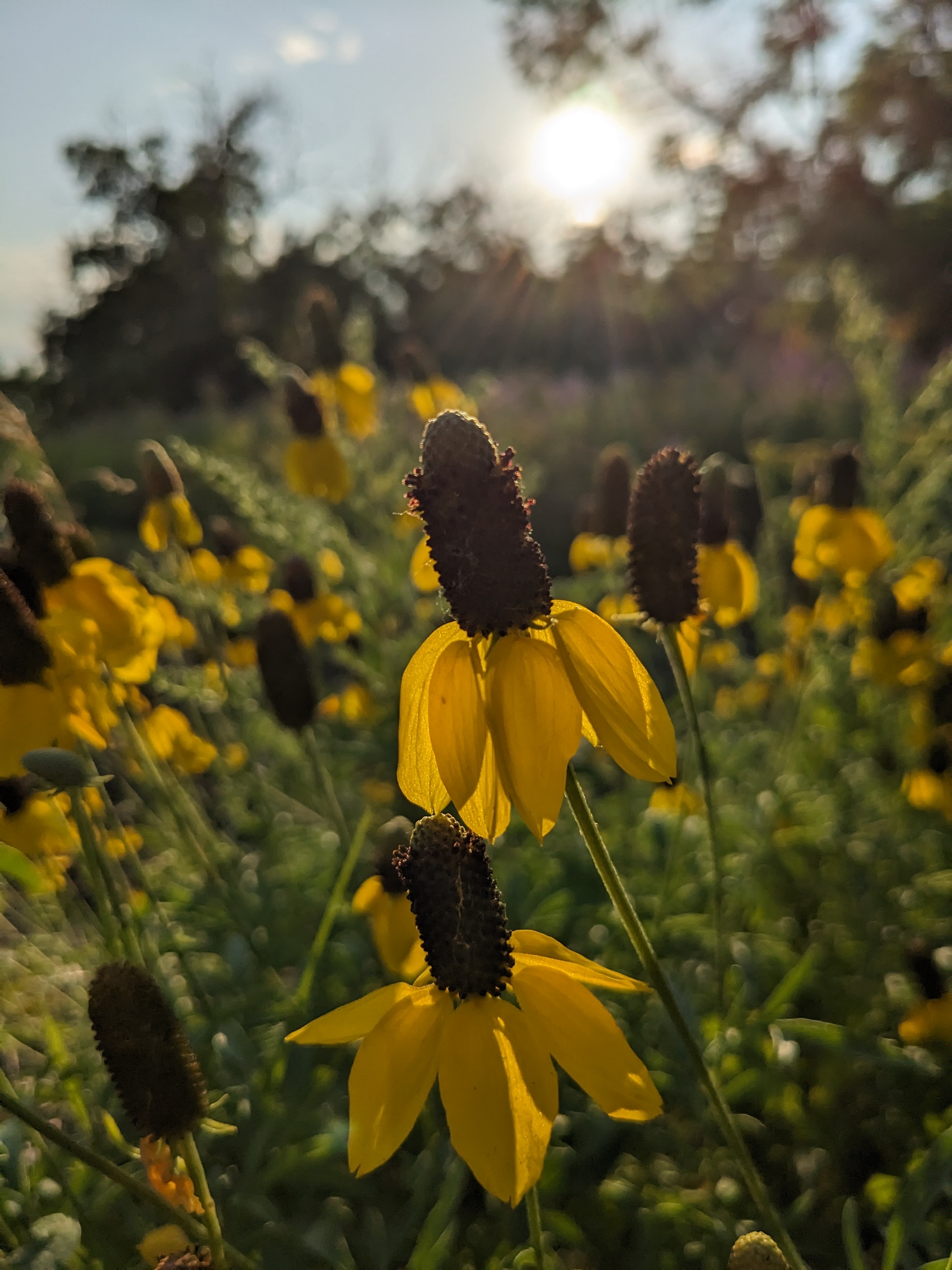
Each site has approximately 20-25 different species of plants native to Manitoba, which in turn attracts pollinators native to Manitoba as well. These gardens differ from typical city gardens in that these plants are perennials and are more hardy then the annuals typically planted by city gardeners. Once established, native plants don’t require watering as they are adapted to the climate of the prairies. They have deep root systems which also have the power to sequester carbon, yet another benefit of native plants!
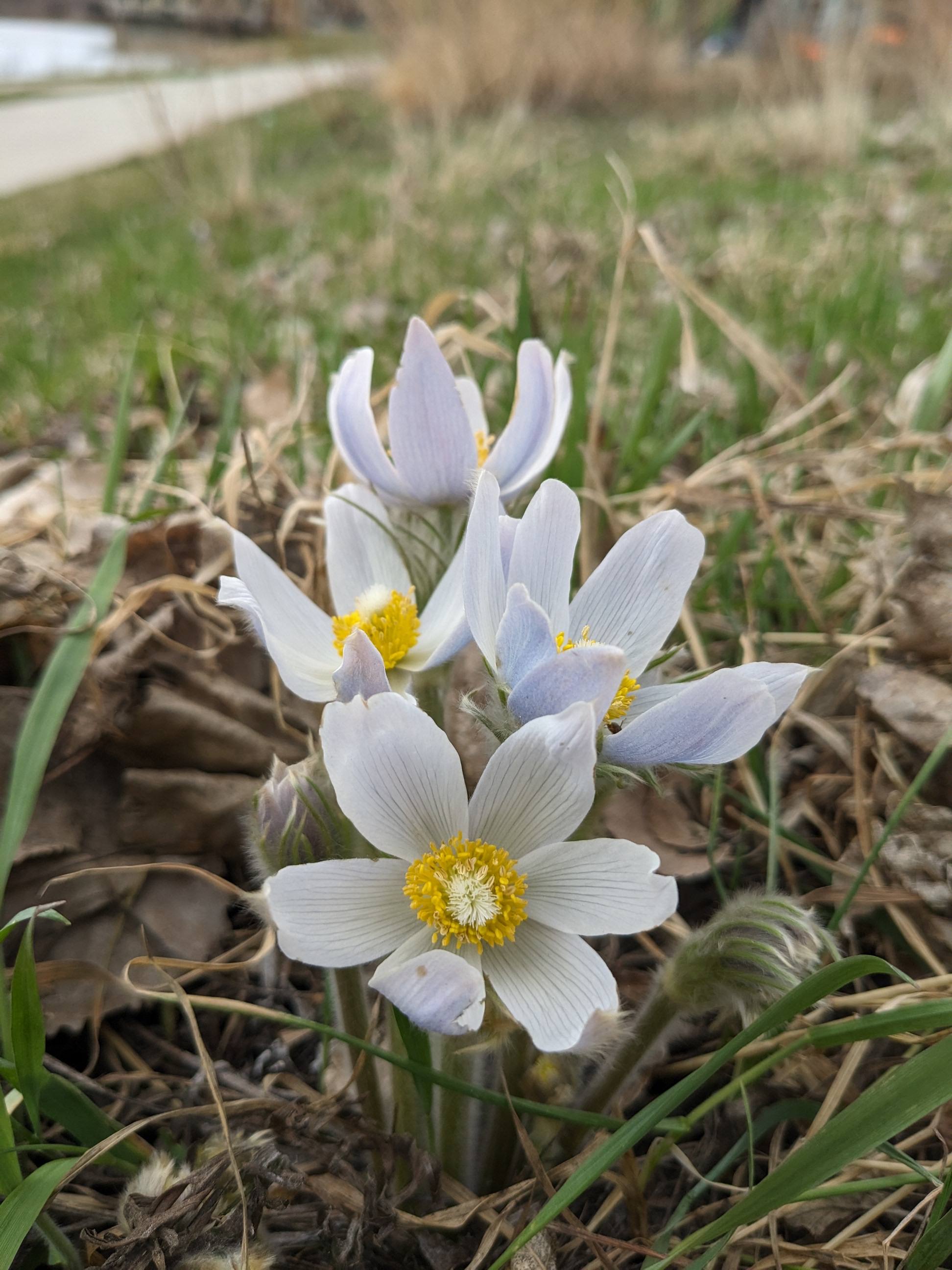
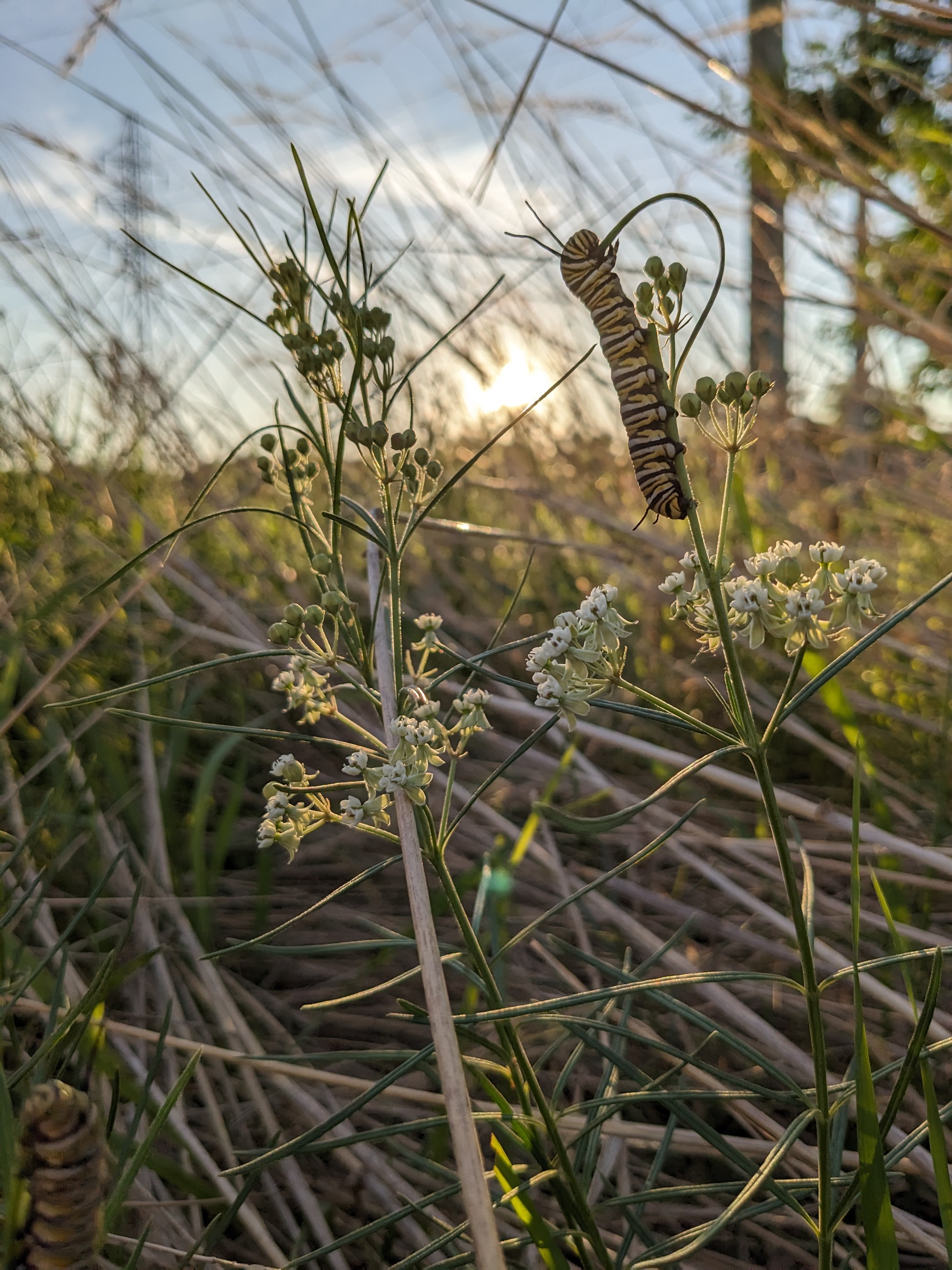
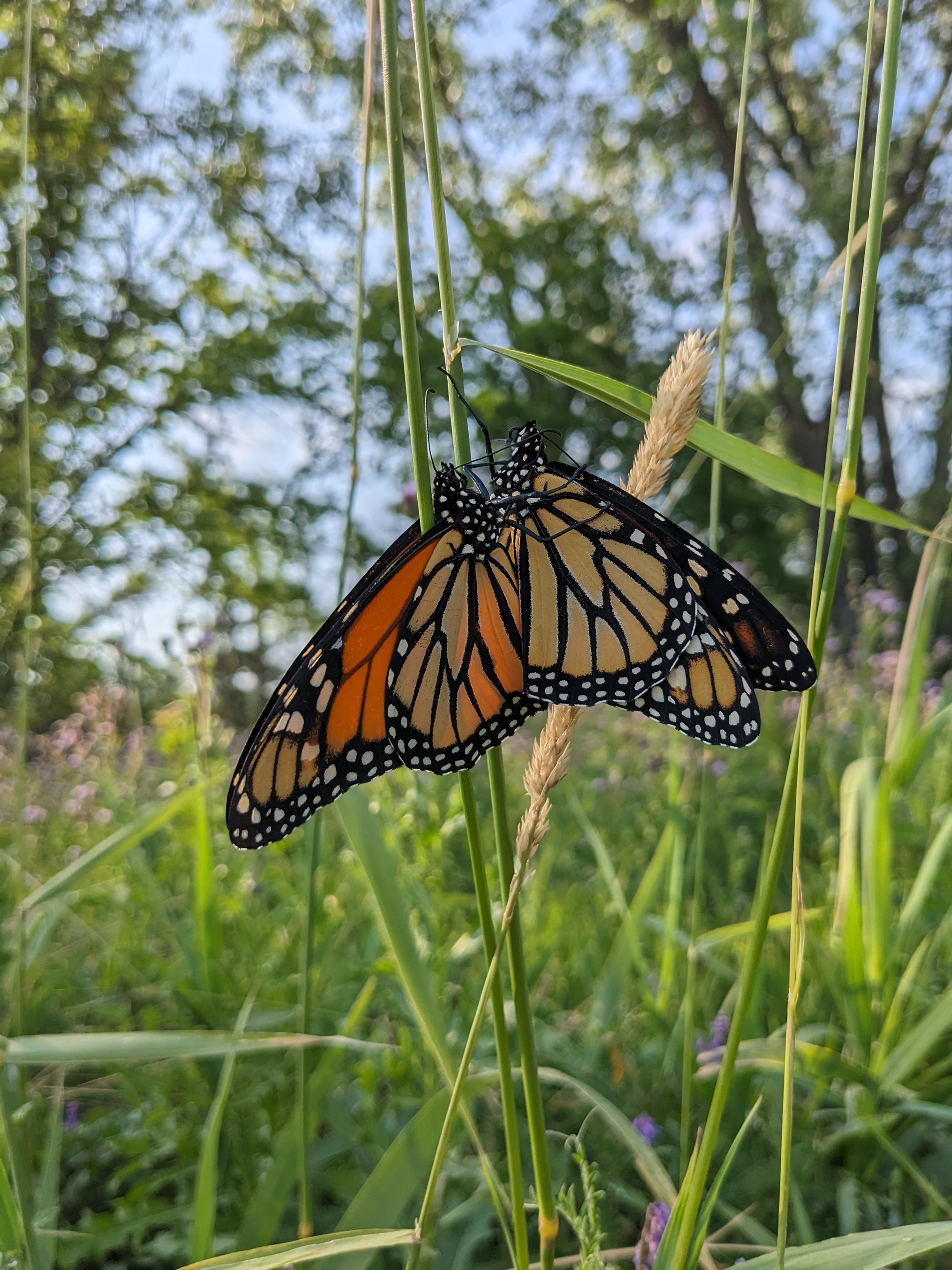
The photos below are courtesy of Nicole Webster and highlight just a few of the flowers and insects that are now home at the various garden sites.


Challenges
While it is easy to focus on the positives that has come about through the creation of these community gardens, it is important to discuss the challenges that small, volunteer based organisations face.
During my discussion with Kelly and Nicole, they identified the following as the main challenges:
- Finding volunteers who are local to each site that are committed to the ongoing maintenance of the site
- Invasive species finding their way to the garden sites, resulting in the need for continuous weeding
- Trying to inspire and support people to create the gardens in their local community
- Finding funding. You have to put in a lot of effort with grants and you never know if you will receive it. Grants usually apply for new projects only, not many organisations fund the maintenance of ongoing projects.
Successes and Favourite Moments
Aside from the completion of five garden sites, some of Kelly and Nicole’s biggest successes and favourite moments from their four years of volunteering with the WWP include:
- New friendships gained from the committed volunteers
- Local news outlets have picked up on the work the WWP is doing and have featured them on a few occasions. Check out this link for a short 1 min 15 second clip from CTV on the seed packet distribution initiative and the goal of the project: ‘We want to re-wild the city a little bit’ | CTV News.
- Featured in the Our Community section in the Winnipeg Free Press, linked below:
- Inspiring a city councillor to take the initiative to plant native species along a local greenway (independent from the WWP). The City of Winnipeg prepped and planted the area.
- Goldfinches found the narrow leaf sunflower seeds and used them as a regular food source at the Waterfront garden.
- Monarch butterflies found the milkweed at 5 out of the 6 sites and can now be spotted throughout the summer, using the milkweed to lay their eggs and provide food for the growing caterpillars.
- Community members have shared stories about they have successfully grown and planted seeds that they have collected from the gardens.
- The WWP has given away thousands of seed packets for people to start their own gardens.
- The WWP has been interviewed for the David Suzuki Foundation’s documentary “The Butterflyway Diaries” (and are featured at 0:18-0:19 in the documentary trailer linked below.) For more information the Butterflyway Project, check out the link: https://davidsuzuki.org/take-action/act-locally/butterflyway/
- The grand finale of the season was seed bombing a riverbank on the final seed collecting day.
- The habitat creation and seeing the wildlife that finds the gardens.
Community Connections
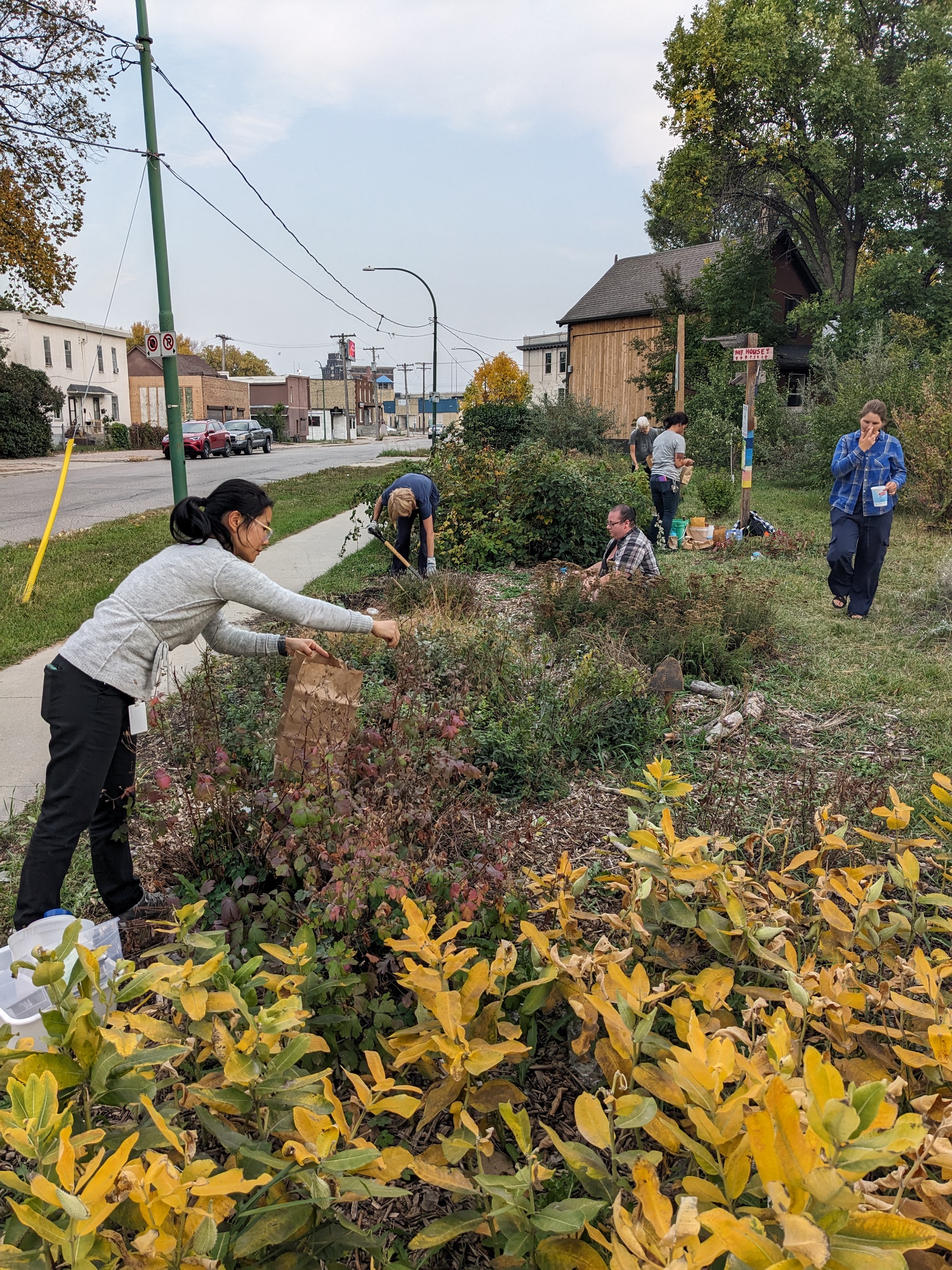
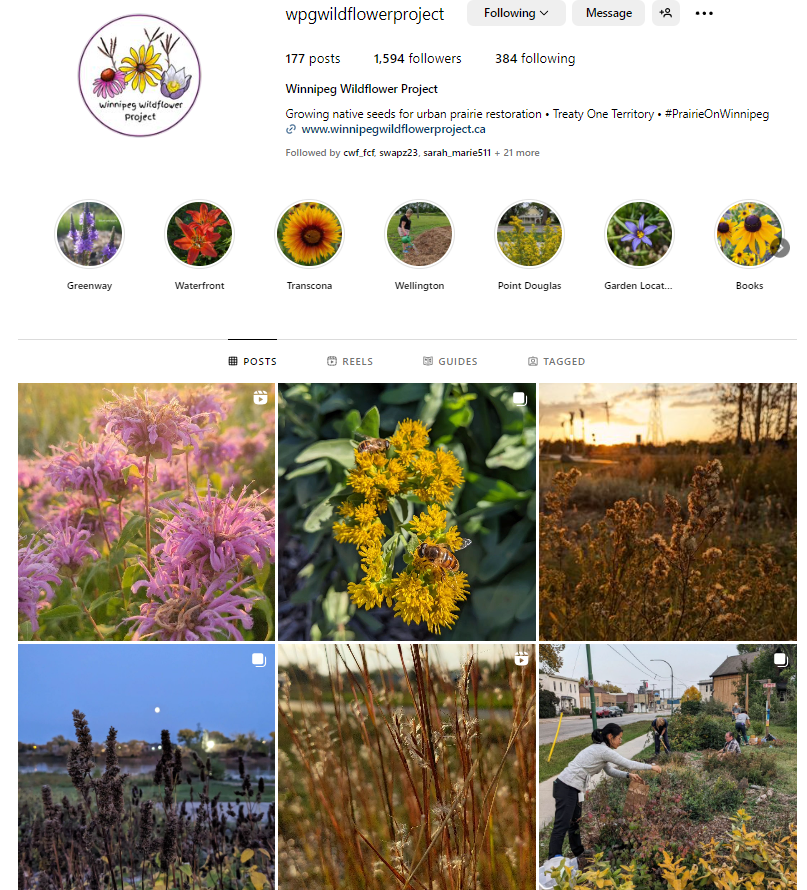
Throughout the summer months via Instagram, Nicole posts the times she will be at each of the sites and asks for volunteers to assist with various jobs including: planting and watering (with new projects), weeding (established sites), and seed collecting (in the fall).
The group has received compliments from local people in the area and has connected with different community organisations, schools, libraries, and cafes, to distribute seeds collected from the sites.
The Winnipeg Wildflower Project website has a list of many great resources for people to find information on where to purchase native plants, useful books to help with plant identification and gardening, as well as videos and podcasts on native plants.
After seeing the benefits of planting native plants, I myself, have planted native plants in my home as well as at my school. I applied and received a grant from TD Friends of the Environment Foundation, to create a raised garden bed for a native pollinator garden. It is awesome to see the monarchs and other pollinators find the garden after only a few short years.
Conclusion
Since it’s inception, the Winnipeg Wildflower Project has been featured in newspapers and has been interviewed with the local news. They have been influential in the native plant movement in Winnipeg (and beyond city limits). Their goal is to inspire everyday people to plant native plants in their own backyard to provide essential and critical habitat for native pollinators (and if you don’t have a backyard of your own, help volunteer at one of the WWP sites). Nicole and Kelly’s dedication and passion for native plants and the various insects and animals that call these gardens their home is nothing short of an inspiration. They have put in countless hours in these gardens in different areas of the city to allow others to experience the joy these plants provide.
Sources:
The butterflyway project. David Suzuki Foundation. (2023b, November 21). ________https://davidsuzuki.org/take-action/act-locally/butterflyway/
Canadian Wildlife Federation. (n.d.). The Canadian Conservation Corps. ________https://cwf-fcf.org/en/explore/conservation-corps/
CTV News Winnipeg. (2023, March 6). ‘We want to re-wild the city a little bit.’ ________CTVNews.ca. https://www.ctvnews.ca/video?clipId=2642139
David Suzuki Foundation. (2023a, February 7). Trailer: The butterflyway ________diaries. YouTube. https://www.youtube.com/watch?v=bAyqKr-lMJc
Prairie originals – native prairie plants – prairie originals – native prairie plants ________and seeds. Prairie Originals – Native Prairie Plants – Prairie Originals – ________Native Prairie Plants and Seeds. (n.d.). ________https://www.prairieoriginals.com/
Shulha, S., Webster, N., & Leask, K. (2023, November 17). Winnipeg ________Wildflower Project Interview. personal.
Streilein , K. (2022, July 13). The way nature intended. Our Communities. ________https://www.winnipegfreepress.com/our-________communities/east/2022/07/13/the-way-nature-intended
Webster, N. (n.d.). Winnipeg Wildflower Project. ________http://www.winnipegwildflowerproject.ca/
 Sustainability, Creativity, and Innovation: Sustainability in the Classroom