Social Entrepreneurs, as defined in Zhao’s book World Class Learners (2012), are people “who recognize a social problem and apply entrepreneurial principles to achieve social change” (p. 4). To me, one of the most important aspects of a social entrepreneur is that their sole purpose is not only about making money. They place equal or greater value in helping in other causes from people, to animals, to the environment.
Anna Hunter, is a farmer, public speaker, author, and owner of Long Way Homestead, a fibre farm and wool mill in Manitoba. She tackles the problems of building resilient fibre systems in Canada through the use of regenerative agricultural practices. There was a clear need from consumers who wanted to purchase their wool locally and there was a lack of wool mills for farmers to send their wool to be processed. People are becoming increasingly aware of their carbon footprint and want to know where their clothing and food is coming from. In the clothing industry, this is difficult to come by as evidenced from the tags on clothes we wear with names from countries around the world (in many cases where labour costs are low, largely due to poor working conditions and pay).
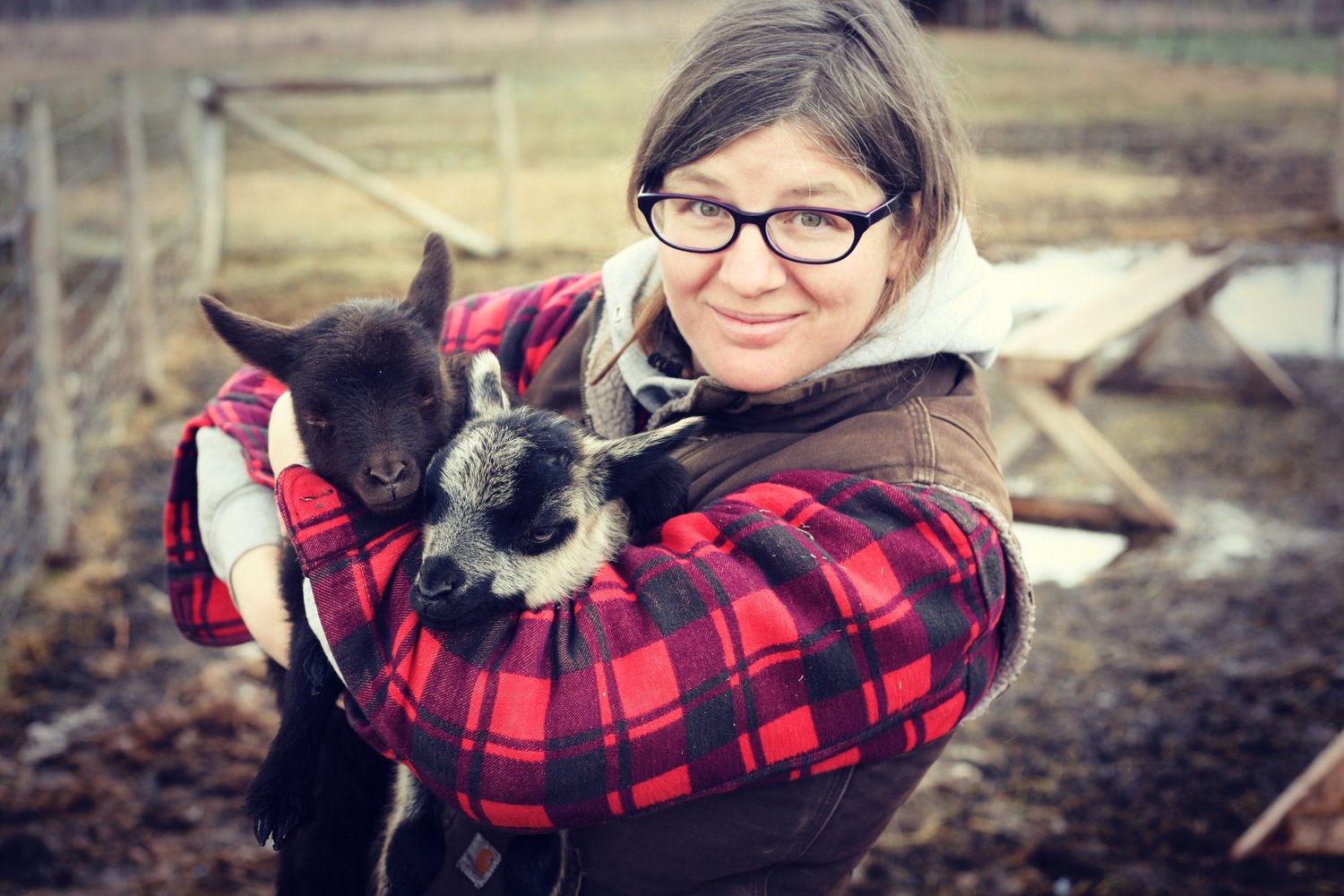
Photo sourced from: https://www.longwayhomestead.com/.
Anna began her yarn and fibre entrepreneurial journey with a yarn business in Vancouver, named Baaad Anna’s. Her business there focused on locally produced and dyed wool- which was hard to obtain. After owning that business for five and a half years, Anna and her husband decided they needed a change, and moved to Manitoba in 2015 where they purchased land to start a sheep farm. After raising sheep for their wool, it was apparent that there was no local wool mills to process wool and produce yarn. This was the next challenge they took on- creating a wool mill from the ground up.
“In Canada, we grow three million pounds of wool collectively as a country, and most of that is sent to China where it is turned into either clothing or rugs or yarn and then is shipped back to the companies that sell it.”
– Anna Hunter
To try and resolve this disconnect between growers, consumers, and makers, Anna and her husband decided to start their own mill, connecting people to the animals that grow the wool and eliminating the need for wool to be shipped around the world and back again, significantly reducing the carbon emissions that this process takes.
Check out the video linked below, created by Range Finder, for some information and history of Long Way Homestead.
Motivations for taking the steps to localise wool production where none previously existed came from Anna’s intrinsic motivation to solve problems and find solutions to needs. The connection between her passion and business has resulted in her success in this industry.
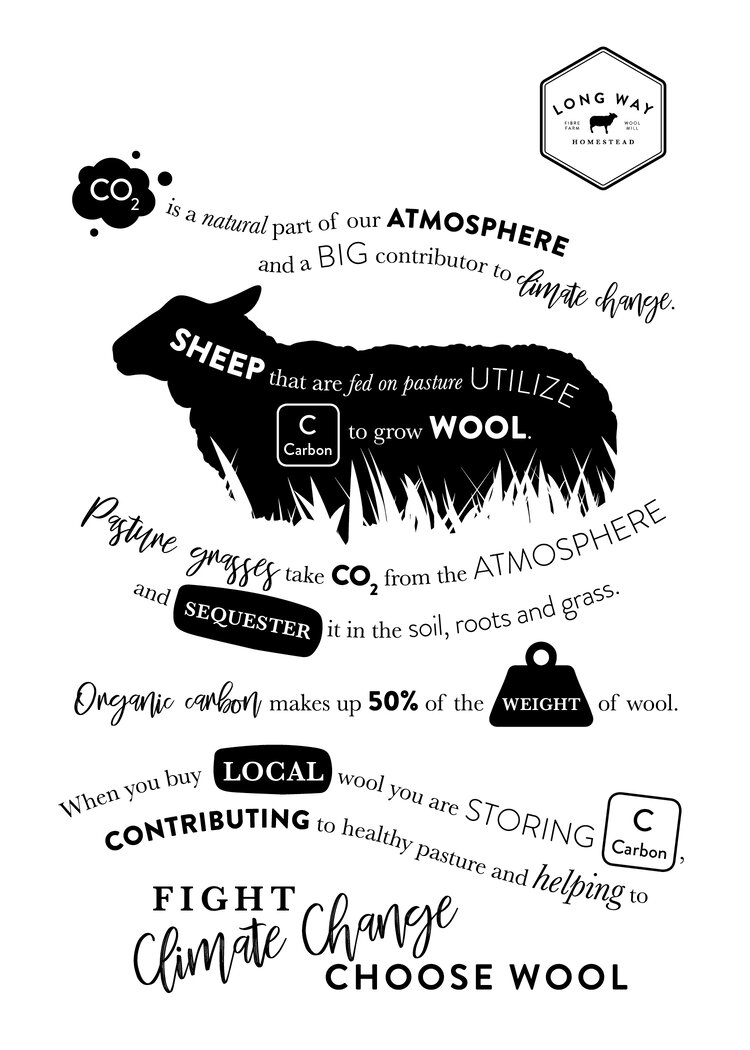
Anna has conducted her own research on the Wool Industry in Canada, and has published the results via the Infographic pictured below.

While there has been much success, Anna and her husband have had to overcome many barriers in the creation of their wool mill. From the lack of information and training, as no one else was doing this in the province, to capital and investment. Learning as they went, Anna and her husband have created a successful mill and now take their knowledge and teach others in this process.
Recommendations for fostering creativity, innovation, and entrepreneurship from Anna include rooting in your own experiences and being authentic in what you do. Anna discussed how they rooted their business in the fact they they knew nothing about creating a wool mill and they shared the challenges they faced which brought people into their story. Their authenticity has allowed people to connect with their business.
There are many ways in which Anna’s business has contributed to economic and environmental well being. With her yarn store in Vancouver back in 2009 (which sourced locally produced yarn) to Long Way Homestead today (which has allowed many farmers to have their wool processed locally), she helps people foster a connection to the animals and land that produce the wool. In the process, she enables people have control over where their clothing is coming from, thus limiting the overall environmental impact of her product. She also helps others implement regenerative agriculture on their farms through her Field School courses, which helps in our global quest to reduce our CO2 emissions in the atmosphere.
Today, Anna’s business encompasses many parts, from processing wool to yarn for many farmers around Canada, a Farm Store which sells locally made yarn, natural dye kits, mini wool pellets, and other merchandise including her book “Sheep, Shepherd, and Land.” Long Way Homestead also has a Breed Study which allows knitters to experiment with different types of yarn and fibre. This Breed Study helps protect at-risk species of sheep and helps support small farms that raise and breed wool from various breeds of sheep, once again, allowing consumers to have a connection to the source of their wool.
Long Way Homestead also offers a Field School with different workshops and classes about topics including regenerative fibre farming, sustainable textile production, sheep, wool, and natural dyes, as well as hands on textile education.
Anna has demonstrated determination, creativity, innovation, and growth to create and foster her business. She uses environmental principles to ensure that her business is helping the environment and then teaches others what she has learned along the way. This, to me, makes her an excellent example of a social entrepreneur and inspires me to take a closer look where my clothing is coming from and find ways to buy local as much as possible.
Sources:
Hunter, A. (n.d.). Local Canadian Wool. Long Way Homestead. https://www.longwayhomestead.com/
Hunter, A., & Shulha, S. (2024, January 27). Social Entrepreneur . personal.
YouTube. (2018, November 19). Longway homestead. Range Finder. https://www.youtube.com/watch?v=aTBClOCUGfI
Zhao, Y. (2012). To create is human (Introduction). In World class learners: Educating creative and entrepreneurial students (1-22). Sage.
(WordPress does not allow formatting for hanging indent, the proper formatting for APA)
 Sustainability, Creativity, and Innovation: Sustainability in the Classroom